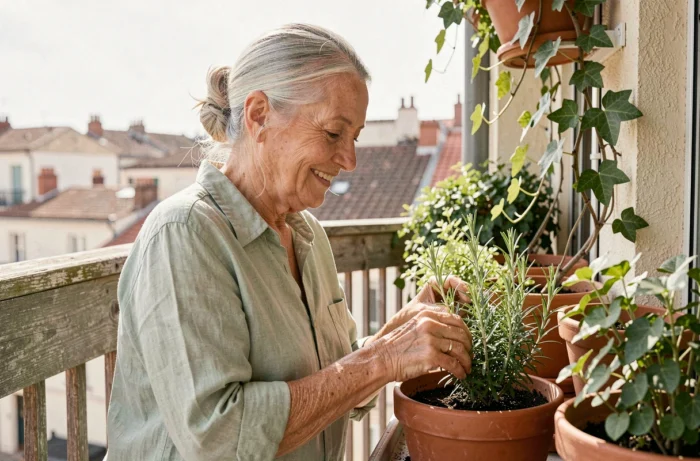
Aging well is not just about a list of good individual habits. Behind the classic advice on diet or physical exercise, recent developments in public assistance and housing adaptation are concretely changing the living conditions of seniors in France. Living better on a daily basis after 60 also requires knowing the existing systems, their limitations, and the administrative obstacles that hinder access to them.
Decline in home assistance: what recent data shows
Content dedicated to aging well emphasizes staying at home as a primary objective. Data published by the DREES on September 3, 2026 presents a less reassuring observation: the number of beneficiaries of home assistance for the elderly decreased over one year in 2025, despite demographic aging.
The number of beneficiaries of the APA at home notably decreased after several years of growth. This trend may signal an increased non-use, a tightening of access criteria, or capacity difficulties within departmental services.
The subject remains poorly documented in usual practical guides. The resources available on conseils-seniors.fr allow tracking these developments and identifying the appropriate steps for each situation. Understanding why assistance is declining while the need is increasing is a prerequisite before planning daily life at home.
Housing adaptation and MaPrimeAdapt’: the administrative constraints to anticipate
Installing a walk-in shower or adding grab bars seems simple. The administrative process to finance these works is much less so. The MaPrimeAdapt’ program, supported by Anah, imposes several conditions that surprise applicants.
Requirement to go through a certified project management assistant
Before choosing a contractor, the applicant generally must consult a project management assistant (AMO) certified by Anah. This professional assesses needs, establishes a diagnosis, and assists in compiling the application. Without this intermediary, the request is likely to be rejected.
Prohibition on starting work before notification
Starting work before receiving the official notification of assistance results in the loss of funding. This often-unknown rule traps those rushed by a rapid loss of autonomy or a recent hospitalization. The time between submitting the application and receiving notification can extend over several weeks.
These constraints partly explain why housing adaptation remains underutilized compared to actual needs.
Fragility and prevention: spotting signals before loss of autonomy
Gerontological research distinguishes three states: robust, fragile, and dependent. The phase of fragility, reversible in many cases, is the moment when action has the most impact. Field feedback varies on the best way to identify this fragility on a large scale.
- The ICOPE program, promoted by the WHO and deployed in certain French regions, offers screening covering mobility, nutrition, and psychological health. It remains unevenly accessible across territories.
- Unintentional weight loss, persistent fatigue, and slowed walking are among the most monitored markers by geriatricians.
- Social isolation exacerbates fragility: isolated elderly individuals face an increased risk of functional decline, a documented link whose precise mechanisms are still under study.
Addressing fragility requires early detection, often during a routine consultation or a visit to the emergency room for a minor issue. The available data does not yet allow conclusions about the comparative effectiveness of different screening tools on a national scale.

Health misinformation: an underestimated vulnerability of seniors
Guides on aging well rarely address a growing risk: the vulnerability of seniors to online misinformation. Experts warn about the spread of false health information targeting the elderly, particularly on social media and messaging platforms.
Miracle diets, dietary supplements presented as alternatives to medical treatments, conspiracy theories about vaccination: these contents exploit the legitimate concerns associated with aging. Seniors, sometimes less familiar with digital codes, have fewer benchmarks to assess the reliability of a source.
Developing a verification reflex (cross-referencing sources, prioritizing institutional sites, consulting one’s primary care physician) is part of prevention skills just like physical activity or balanced nutrition. Aging well also involves information hygiene.
Financing dependency: an ongoing debate
Funding for old age remains a legislative project postponed several times.
Staying at home, less expensive than institutional care, is presented as the priority solution by public authorities. However, the resources allocated to home assistance services do not follow the same trajectory as demographic needs, as shown by the DREES figures mentioned earlier.
This tension between political ambition and budgetary reality directly affects the daily quality of life of elderly individuals. Anticipating one’s financial situation in the face of a potential loss of autonomy remains a step that few practical guides explicitly encourage, due to the lack of simple answers to propose.
Aging well is not solely determined by diet or gym attendance. It also depends on the ability to navigate a complex assistance system, adapt one’s housing before emergencies arise, and protect oneself against misleading information. These dimensions, less visible than lifestyle hygiene advice, nevertheless determine the real leeway seniors have in their daily lives.