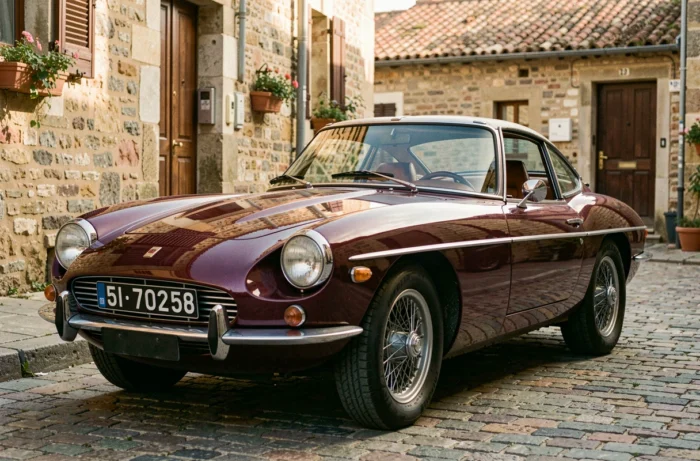
The passion for classic cars encompasses very different realities depending on the market segment, the era of the vehicle, and the local regulatory framework. Between the historical classics from before 1970 and the youngtimers from the 1980s-1990s, price trends, usage constraints, and buyer profiles diverge significantly. This article measures these gaps based on available data from the French and European markets.
Historical Classics vs. Youngtimers: Two Opposing Market Dynamics
The market for vintage cars does not form a homogeneous block. Recent analyses show a growing separation between two segments: the icons from the 1950s to 1970, and the more recent models classified as youngtimers.
Grand historical classics are going through a phase of consolidation. The prices of the most sought-after models are stabilizing, or even slightly declining after a decade of sustained increases. In contrast, youngtimers are experiencing strong dynamics, driven by a new generation of collectors seeking accessible and usable vehicles for everyday use.
| Criterion | Historical Classics (before 1970) | Youngtimers (1980-2000) |
|---|---|---|
| Price Trend | Consolidation, stabilization | Regular increase |
| Buyer Profile | Heritage collectors | Active enthusiasts, regular use |
| Maintenance | Rare parts, specialized workshops | More available parts |
| Use in ZFE | Exemption under conditions (collection registration) | Often not eligible without collection card |
| Financial Accessibility | High to very high budget | More affordable entry-level |
This differentiation in the vintage car market reflects a generational change. Collectors who grew up with the Peugeot 205 GTI or the BMW Series 3 E30 are reaching an age where their purchasing power allows them to acquire the models of their youth.
The available documentary resources on lesvoituresanciennes.net allow tracking this evolution and identifying models whose value is increasing.

Collection Registration and ZFE Exemptions: A Fragmented Regulatory Framework
One of the most concrete parameters for owners of vintage vehicles concerns Low Emission Zones (ZFE). Of the 43 territories initially planned in France, only Paris and Lyon imposed real constraints as of January 1, 2024. Other urban areas remained in a phase of vigilance.
Timelines are gradually tightening, with prohibitions now targeting Crit’Air stickers 3, 4, and 5, as well as vehicles that are too old and unclassified. This evolution directly affects classic cars that do not have the correct administrative status.
Collection Exemption: What the Registration Changes
Vehicles registered with a collection registration do not need a Crit’Air sticker and generally benefit from an exemption from ZFE restrictions. This exemption is based on the recognition of occasional use and heritage interest.
The reality is more nuanced. Exemption conditions remain local and conditional, defined by specific municipal decrees. A classic vehicle may circulate freely in one metropolis and be denied access in another. This highly contrasting situation from one metropolis to another requires checking local rules before each trip.
- Obtaining the collection registration requires a FFVE certificate (French Federation of Vintage Vehicles), which certifies the vehicle’s compliance with its original condition
- The vehicle must be over thirty years old and no longer produced by the manufacturer
- Collection registration limits certain uses (no commercial transport, adapted technical control) but opens ZFE exemption in most cases
- Youngtimers under thirty years old cannot claim this status, exposing them to Crit’Air restrictions in the affected areas
Automotive Heritage and Events: Where Enthusiasts Meet in France
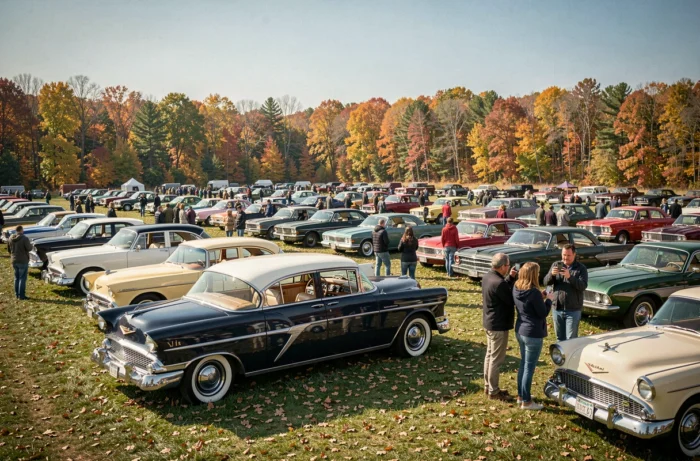
Beyond the financial and regulatory aspects, the passion for vintage cars is structured around events that bring together collectors, restorers, and casual enthusiasts. The French calendar includes several major events with varying formats and audiences.
Elegance contests, inspired by historical models, highlight the aesthetics and authenticity of the vehicles. Brand gatherings (Porsche, Citroën, Ferrari) attract very specialized communities. Swap meets remain the preferred circuit for finding hard-to-find spare parts online.
Design and History: What Determines the Value of a Classic Vehicle
The value of a classic car does not depend solely on its rarity. The documented history of the vehicle (number of owners, maintenance, participation in events), the quality of a restoration faithful to original specifications, and the presence of manufacturer documentation play a decisive role.
A common model with a complete history and original paint can be worth significantly more than a rare example that has been poorly restored. Savvy buyers examine the maintenance log with as much attention as the bodywork.
Taxation of Classic Cars: The Rules to Know Before Buying
The acquisition of a vintage vehicle involves a fiscal aspect that is often underestimated. Classic cars benefit from a specific regime regarding capital gains upon resale. Taxation applies under conditions distinct from those for utility vehicles or traditional financial investments.
- The resale of a classic vehicle may be subject to a flat tax on precious objects or the general capital gains regime, depending on the seller’s choice
- Classic vehicles are exempt from the company vehicle tax and certain regional taxes upon registration
- Insurance for a classic vehicle generally costs less than standard insurance, due to the low annual mileage declared
The collection status offers real tax advantages but strictly regulates the use of the vehicle. Before any purchase, verifying eligibility for the FFVE certificate and calculating specialized maintenance costs can help avoid unpleasant surprises. The market for vintage cars remains a realm where technical knowledge is as important as the budget.


