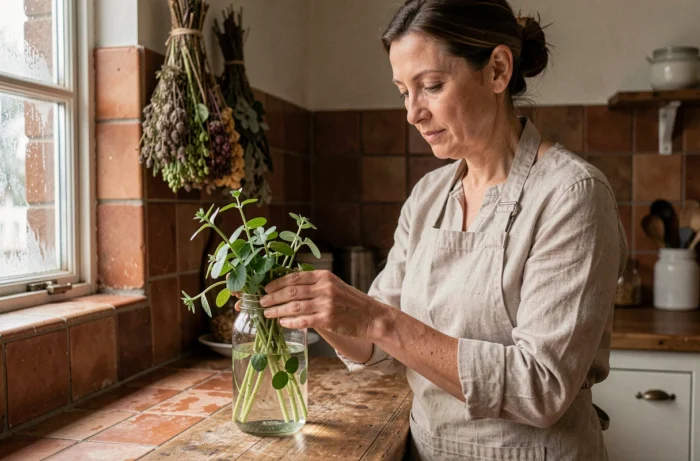
When harvesting purslane in the summer, the question quickly arises: how to avoid losing this surplus of fleshy leaves once the first cold sets in? Purslane (Portulaca oleracea) does not tolerate frost, and its water-filled stems degrade within a few days in the refrigerator. To enjoy it until the heart of winter, action must be taken right after harvesting with techniques suited to this particular plant.
Drying Purslane: Turning Leaves into Powder for Winter
Most guides on preserving purslane focus on freezing or vinegar. Drying is rarely mentioned, yet it is the method that takes up the least space and preserves some of the nutrients for the longest duration.
Purslane contains a lot of water. To dry it properly, spread the leaves and thin stems on a rack without overlapping them. A dehydrator set to low temperature yields the best results, but an oven left slightly open at the lowest temperature also works. Sun drying is possible in regions where summer offers several consecutive days of dry heat.
Once dry, purslane is ground into powder using a spice grinder. This powder can be incorporated into soups, homemade breads, or winter smoothies. There are several methods for preserving purslane that complement this approach, particularly for vinegar or brine preparations.
Research published in 2026 in the journal Nutrients compared traditional drying and freeze-drying of purslane. Freeze-drying preserves more bioactive compounds, but it remains inaccessible for most amateur cooks. Low-temperature drying is the best domestic compromise.
Lactofermentation of Purslane: Long-Term Preservation Without a Freezer
Lactofermentation is often associated with cabbage or pickles, rarely with purslane. Yet, it is a very suitable option for this plant, for one simple reason: its thick and slightly mucilaginous leaves withstand immersion in brine without breaking down.
Preparing a Jar of Lactofermented Purslane
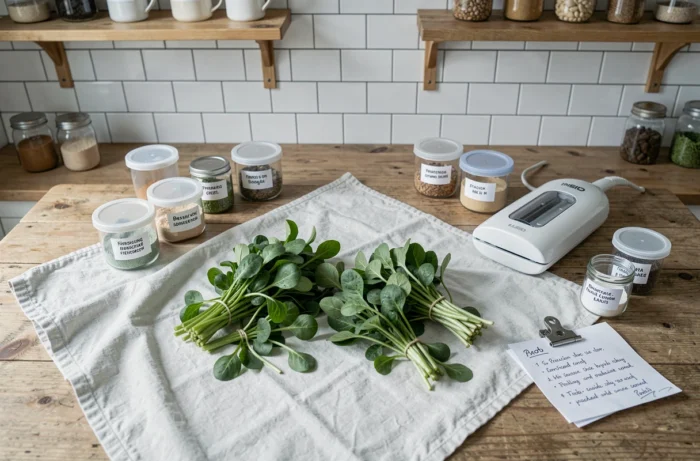
The principle is the same as for any fermented vegetable. Carefully wash the stems and leaves, pack them tightly into a clean glass jar, and then pour in a brine (non-chlorinated water and salt, without additives). The purslane must remain submerged under the liquid.
- Use young, firm stems harvested in the morning before the heat to ensure a crunch that holds during fermentation
- Measure the salt at the same ratio as for classic pickles, avoiding iodized salt that can hinder beneficial bacteria
- Allow to ferment at room temperature for a few days, then store in a cool place (cellar or refrigerator) to slow the process
- Add garlic, pepper, or mustard seeds to vary the flavors from jar to jar
Feedback varies on the shelf life achieved, but a well-prepared jar kept cool generally lasts several months. The advantage over freezing is: no energy expenditure once the jar is closed.
A Nutritional Benefit Enhanced by Fermentation
Recent studies on fermented purslane show that fermentation alters its metabolic profile. It can enhance certain beneficial effects, particularly on gut microbiota and digestive inflammation. This is not just a simple preservation method, but a transformation that adds nutritional value to the final product.
Freezing Purslane: What Works and What Is Lost
Freezing remains the quickest method. Blanch the leaves and stems for a few seconds in boiling water, immediately plunge them into ice water, then drain before dividing into portions in bags.
Blanching is essential to stop enzymatic oxidation. Without this step, thawed purslane turns brown and loses its characteristic slightly tangy flavor.
The limitation of this method is well-known: texture. Thawed purslane leaves lose their crunch. They are suitable for soups, gratins, or omelets, but not for salads. For raw use in winter, it is better to turn to lactofermentation or vinegar preservation.
Winter Sowing and Extended Harvest: Keeping Purslane Fresh Under Shelter
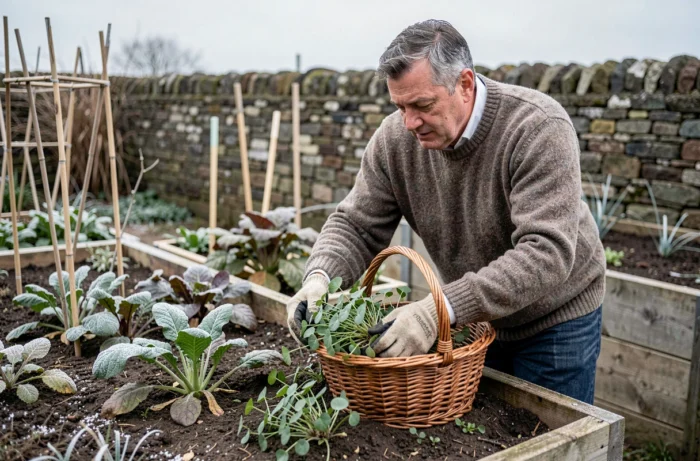
Rather than preserving everything, one can also extend the harvest season. Purslane does not survive frost in open ground, but under a cold frame or in an unheated greenhouse, it continues to produce leaves as long as the temperature does not drop too low for too long.
A late sowing in late summer under shelter yields usable plants until December, sometimes longer depending on the region. Sow the seeds directly into light, well-drained soil, ensuring maximum exposure to the low autumn sun.
- Prefer a sandy potting mix that prevents water stagnation, which is fatal to purslane roots in cold weather
- Protect the plants with a winter cover in case of very cold nights, even under a frame
- Harvest leaf by leaf rather than cutting the whole plant to stimulate regrowth as long as possible
This approach does not replace preservation but complements it. We eat fresh as long as the plants hold, and then we draw from jars or the freezer afterward.
Combining two or three of these techniques covers the entire cold season. Powder drying for everyday hot dishes, one or two fermented jars for appetizers and side dishes, and a few bags in the freezer for soups: summer purslane can remain on the plate until the following spring.


