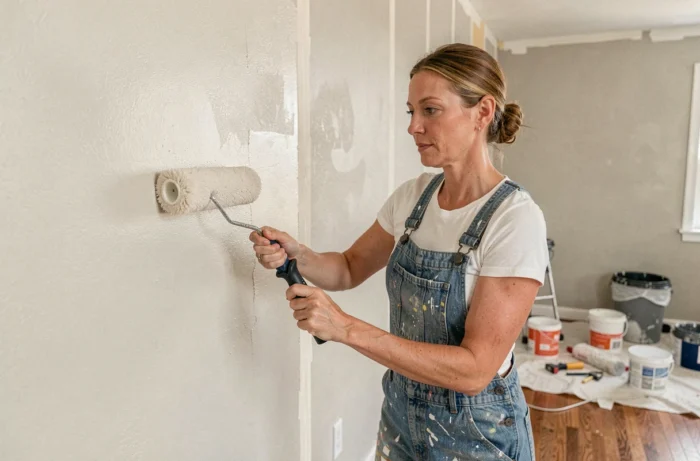
Maintaining a house involves addressing three distinct levels: preventive maintenance of materials and equipment, corrective renovation when an element reaches the end of its life, and decoration that adapts the space to its uses. Confusing these three levels often leads to poorly calibrated expenses or work that is initiated too late.
Energy audit and DPE: the regulatory framework that conditions all renovations
Before planning renovation work, a regulatory point must be addressed. The completion of a regulatory energy audit has been mandatory since April 1, 2023, for selling a single-family home classified F or G according to the DPE. The obligation has been extended to homes classified E since January 1, 2025, in mainland France, and will cover homes classified D starting January 1, 2034.
This audit, distinct from a simple DPE, must be attached to the sales promise and provided to the buyer. For an owner-occupier considering renovations, consulting home information on Veridictus helps to better identify priority areas before engaging a diagnostician.
In practical terms, a home classified E or F loses value in the market until energy renovation work has been completed. The regulatory constraint thus becomes a decision-making lever: insulating the attic or replacing a heating system is no longer just a matter of comfort, but a progressive obligation affecting the majority of the older housing stock.

Preventive maintenance of the house: identifying materials to monitor as a priority
Not all materials in a house age at the same rate. Wood, flooring, plumbing fixtures, and seals require very different intervention frequencies. Confusing routine maintenance with structural repair can be costly.
Wood, water, and seals: the trio to check each year
Elements made of wood exposed to moisture (window frames, cladding, terrace) require treatment or varnish to be renewed regularly. Standing water remains the main enemy: clogged gutters, cracked bathroom seals, and dirty traps. A silicone seal that turns black poses more than just an aesthetic problem; it allows moisture to penetrate the substrate.
Accumulated dust on ventilation grilles reduces air renewal and promotes mold. Cleaning these grilles takes just a few minutes and prevents much heavier treatment work.
Furniture and coverings: matching the product to the surface
Cleaning is not just about wiping with a cloth. Each surface requires an appropriate product:
- Solid wood furniture should be cleaned with a slightly damp cloth and mild soap, never with an aggressive detergent that damages the varnish.
- Natural stone coverings (countertops, floors) cannot tolerate acidic products like pure vinegar, which will erode the surface over time.
- Enamelled cast iron or ceramic dishware is better preserved with soaking in hot water than with abrasive scrubbing.
Using the wrong product on a material accelerates its wear much faster than neglecting maintenance.
Interior renovation: prioritizing the areas that truly matter
Competitors often list all the rooms in a house as equivalent projects. In practice, three areas concentrate the majority of comfort and value gains: thermal insulation, heating system, and ventilation.
Data from MaPrimeRénov’ confirms that single-family homes account for nearly all energy savings generated by renovation efforts. In other words, every euro invested in a home’s insulation produces a measurable return on the energy bill, which is not always the case with a change of tiles or decorative paint.

Prioritize the building envelope before decoration
Repainting a wall that shows signs of moisture without addressing the source (leakage issues, thermal bridges, insufficient ventilation) amounts to masking the problem. The paint will blister again within a few months.
The logical order of a renovation always follows the same pattern: first the shell (roof, walls, joinery), then the networks (electricity, plumbing, ventilation), and finally the finishes (coverings, paint, decoration). Reversing this order multiplies rework and the final budget.
Interior decoration: choices that last against fleeting trends
Decoration is the most subjective aspect of home design, but a few technical principles can prevent costly mistakes.
So-called “warm neutral” paint colors (off-white, linen, greige) remain the most durable because they adapt to any changes in furniture. An accent wall in a bolder shade works well as long as it is limited to one wall per room, making it easy to update if tastes change.
Low-cost decoration tips with high visual impact
- Replacing door handles and kitchen furniture gives a disproportionately renovated effect compared to the expense.
- Indirect lighting (LED strip behind a piece of furniture, table lamp directed towards the wall) changes the atmosphere of a room without any construction work.
- Textiles (curtains, cushions, rugs) are the simplest decorative lever to renew and allow for following trends without commitment.
- Decluttering remains the most effective decorative gesture: removing an unnecessary piece of furniture visually enlarges a space more than any addition.
Decorating does not compensate for a lack of maintenance. A bright and airy room with healthy walls will always appear more pleasant than an interior cluttered with decorative objects placed on degraded surfaces.
The common thread between maintenance, renovation, and decoration remains the same: intervene at the right time, on the right area, with the right product. A well-maintained house costs less to renovate, and a well-ordered renovation provides a solid foundation for decoration. Starting by checking the condition of the DPE and materials exposed to water already provides a concrete roadmap.


