Choosing a wedding dress after 60 comes down to a few precise practical considerations: how the fabric drapes, how the bodice is constructed, and how freely you can move throughout a long day. Cut and fabric matter more than superficial aesthetic considerations, and where you buy the dress deserves just as much attention as the style itself.
Trying on a wedding dress at 60: recreate the conditions of the big day
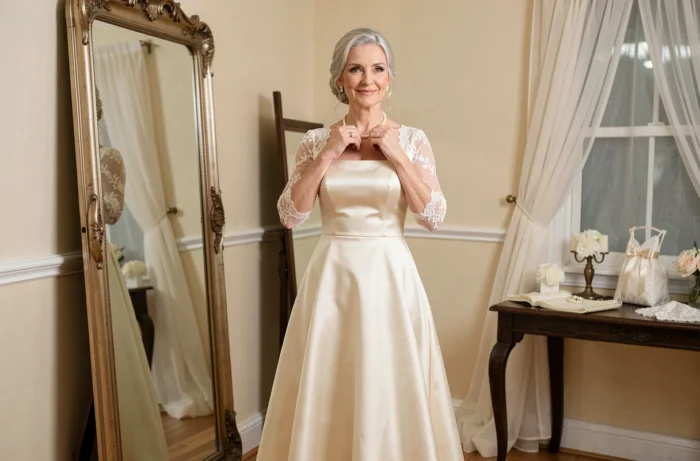
A boutique fitting is pointless if all you do is turn in front of a mirror wearing slippers. Your fitting should simulate the entire day: standing during the ceremony, taking photos outdoors, sitting through a meal for several hours, and possibly dancing in the evening.
Wear the shoes you plan to wear at the wedding from your very first fitting. Heel height changes your posture, which affects how the skirt falls and how the bodice fits. Also test your range of movement: raise a glass, sit down without pulling at the seams, and walk on uneven ground if the ceremony is outdoors.
One point that is rarely discussed is how long you will wear the dress. A dress that feels comfortable for twenty minutes can become restrictive after six hours. Check for chafing around the armholes, waist and back fastening, especially when sitting for a prolonged period. Ask to spend at least thirty minutes in the dress at your final fitting.
Wedding dress cuts and fabrics that flatter after 60
Finding a wedding dress for a 60-year-old woman that combines elegance and comfort means getting to grips with a few basic principles of dressmaking.
Flattering cuts without stiffness
The A-line cut starting just below the bust remains the most versatile. It skims the waist and hips without adding volume and can conceal a soft built-in corset that supports the bust without rigid boning.
A wrap dress creates a V-shaped line that elongates the torso. It suits figures with a fuller midsection, provided the wrap is secured with internal snaps—not just a tie, which can loosen over the course of the day.
The straight sheath dress, often recommended, only works if the fabric contains a little elastane. Without stretch, it restricts movement and shows every crease when you sit down.
Fabric: weight matters as much as appearance
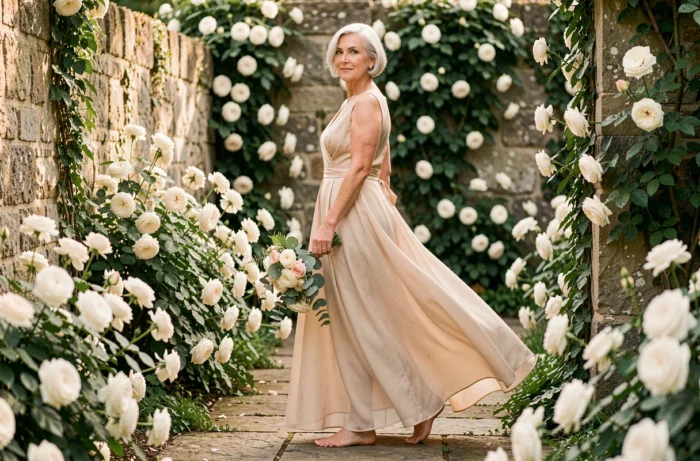
Silk crepe offers the best balance of structure and fluidity. Its natural weight keeps the fabric from blowing around in the wind while allowing it to skim your curves without clinging.
- Chiffon works well for layers (sleeves, a stole or an overskirt), but not as the main fabric of the dress. On its own, it is too lightweight and needs a heavy lining that takes away its fluidity.
- Calais or Chantilly lace adds texture without stiffness, making it ideal for inserts on the sleeves or neckline. Avoid cheap synthetic lace, which can become itchy after a few hours.
- Mikado (a thick, matte silk) naturally gives the silhouette structure and works well with minimalist cuts, but it leaves little room for imprecise alterations: every misplaced seam shows.
Alterations and adjustments: the hidden cost of a wedding dress
Whether you buy the dress new, second-hand or as a sample, alterations can account for a significant share of the total budget. This expense is consistently underestimated.
A simple hem on a straight dress is a minor alteration. Reshaping a lace bodice with a lining, adjusting long sleeves or changing a neckline calls for a seamstress who specializes in wedding dresses—not a general alterations shop.
For a second-hand dress or a sample, check the condition of the load-bearing seams (armholes, waist and zipper) before you buy. Replacing a zipper on a lace back can cost as much as the second-hand dress itself.
Plan ahead for alterations
Allow for at least two alteration fittings, spaced two to three weeks apart. Your body may fluctuate slightly between fittings (water retention, posture), and having a final adjustment made too tight on the eve of the wedding is an unnecessary risk.
Buying, renting or shopping second-hand: which option for a bride over 60?
How you acquire your dress is about more than price. It also depends on your timeline, whether you want to keep the dress, and how much customization you want.
- Buying from a specialist bridal boutique gives you access to custom alterations and fitting support, but made-to-order dresses can take several months to arrive.
- Renting makes sense if you will only wear the dress once and the available style suits your figure without major alterations. Rental agreements often limit the changes you can make.
- Second-hand options (consignment shops and specialist platforms) offer designer dresses at reduced prices, but require a careful inspection of the fabric’s condition: yellowing silk, lost stretch in older stretch fabric, or stains that are invisible under artificial lighting but show up in natural light.
For a 60-year-old bride who wants to wear her outfit again at future events, choosing ivory, champagne or powder blue instead of pure white greatly expands the opportunities to rewear it.
Accessories and styling: practical simplicity over excess
Accessories help shape the finished silhouette; they are not just decorative. A crepe stole covers the arms without weighing down the look, whereas a stiff lace bolero can make the shoulders look broader.
When it comes to jewelry, one statement piece is enough—a choker or drop earrings, never both. Too many accessories break up the overall look and compete with the dress instead of complementing it.
The choice of bag is often overlooked. A rigid clutch means having to put it down constantly. A small matching fabric crossbody bag keeps your hands free for the ceremony and photos without disrupting the harmony of your outfit.
There are no dress codes that dictate what a bride over 60 should wear. The one criterion that matters throughout a full wedding day is genuine comfort, tested in conditions close to those of the big day and in fabrics whose behavior after several hours of wear is known.