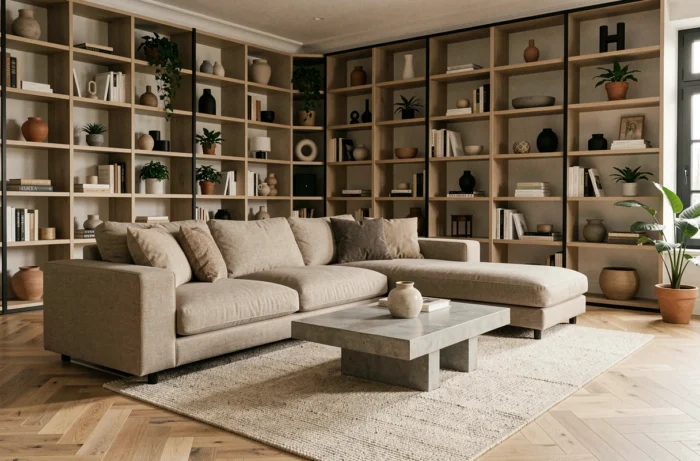
A home rated A or B on the energy performance diagnosis (DPE) can turn into a furnace as soon as the first heat waves hit. The energy performance diagnosis includes a summer comfort indicator in three levels (good, average, insufficient), but it only measures passive comfort, without considering air conditioning. Transforming your house into a modern cocoon therefore requires thinking beyond decoration and integrating thermal parameters from the design or renovation stage.
Summer comfort without air conditioning: orientation, inertia, and solar protections
The RE2020 regulation requires new constructions to control summer comfort through the DH indicator (degree-hours). This constraint forces the management of summer overheating through passive means, radically changing the way to design a pleasant interior all year round.
The orientation of living spaces is the first lever. A south-facing facade receives vertical sunlight in summer, which is easier to block with an eave or horizontal sunshade. West-facing facades, on the other hand, capture low-angle radiation at the end of the day, which is much harder to filter.
We recommend combining three devices for each exposed opening:
- External solar protections (adjustable slat shutters, sunshades, screen blinds) that block radiation before it passes through the glazing, where an interior curtain already allows heat to enter
- Solar control glazing (solar factor below 0.35 on west-facing windows) to limit heat gain without permanently darkening the room
- A cross-ventilation system, made possible by a layout that places openings on two opposite facades, to release the heat accumulated in heavy walls
Thermal inertia is the parameter that decor articles systematically ignore. A wall made of concrete, solid brick, or stone absorbs heat during the day and slowly releases it at night. In contrast, a drywall partition on a metal frame stores nothing. During an interior renovation, keeping the load-bearing walls exposed or using heavy cladding directly contributes to summer comfort.
To delve deeper into these issues of layout and thermal performance, we have compiled resources on the declicweb.fr website in detail that intersect regulatory constraints and decoration choices.
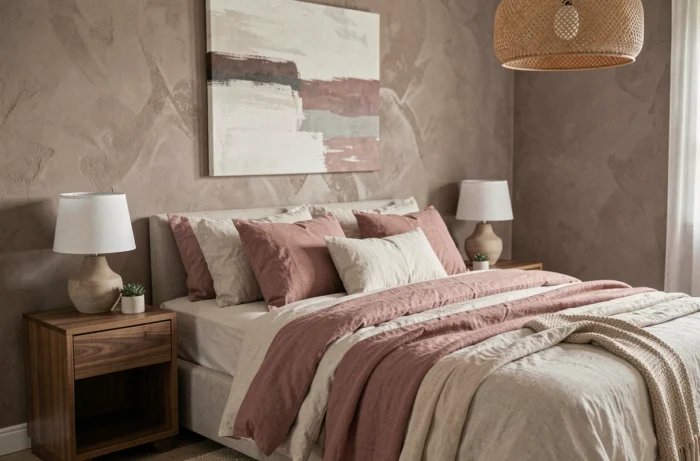
Regulated lighting and cocoon atmosphere: reconciling standards and ambiance
The gradual phasing out of halogen and fluorescent lamps from the European market prompts a rethink of residential lighting. LED remains the only technology available for new installations, which has a direct impact on the luminous ambiance of a cocooning interior.
The color temperature conditions the perception of comfort much more than the wattage. Below 2,700 K, the light leans towards amber and recreates the warm atmosphere of an incandescent bulb. Above 3,000 K, the rendering becomes more clinical, less conducive to relaxation.
The NF C 15-100 standard imposes minimum light points per room and dedicated circuits. In a living room, it requires at least one ceiling light point controlled by a switch. We observe that successful modern cocoon projects layer three types of lighting:
- Indirect general lighting (LED cornice, pendant light directed towards the ceiling) for a homogeneous background light without glare
- Accent lighting (adjustable spots, reading wall lamps) that highlights materials and creates intentional shadow areas
- Ambient lighting (low-voltage garlands, table lamps with dimmers) that takes over in the evening and drops below 2,200 K
A dimmer on each circuit allows switching from a functional mode to a cocooning mode without changing bulbs. This flexibility is well worth the investment in a dimmable circuit from the electrical phase.
Materials and colors: technical choices for a sustainable interior
The choice of materials in a modern cocoon is not just about aesthetics. A lime plaster on a load-bearing wall naturally regulates indoor humidity, whereas standard acrylic paint seals the wall and can promote condensation.
Heavy textiles improve acoustics as well as ambiance. A thick curtain made of linen or velvet reduces sound reverberation in rooms with hard floors (polished concrete, large-format tiles). This acoustic absorption contributes as much to the cocoon feeling as the color palette.
Regarding the palette, muted tones (terracotta, sage green, greige) work better than pure white in a cocooning logic. White reflects light uniformly and flattens volumes. An accent wall in a matte, dark tone creates depth and naturally directs the gaze towards the resting area.
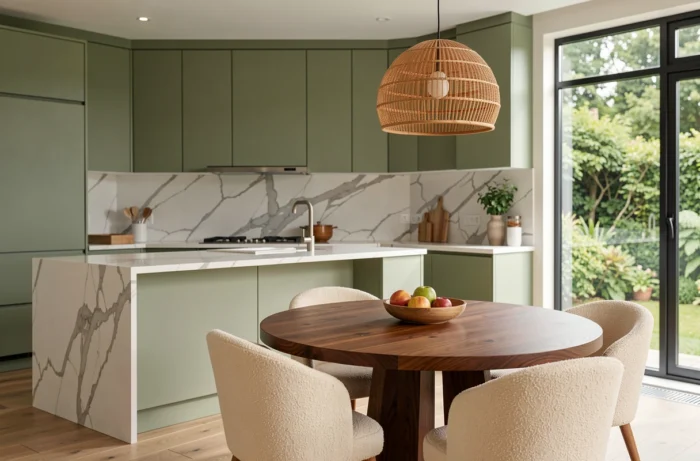
Floor coverings and thermal inertia
A thick porcelain stoneware tile or natural stone flooring retains nighttime coolness much better than a floating floor on insulating underlay. In summer, this thermal mass in the floor maintains a pleasant surface temperature to the touch, without resorting to air conditioning.
Solid wood flooring remains an acceptable compromise if the wood is dense (oak, beech). However, thin engineered wood floors on HDF support provide no inertia and behave like an additional insulator, which exacerbates summer overheating in exposed rooms.
DPE and property value: a cocoon that also protects resale
Summer comfort has become a full-fledged real estate purchase criterion. Recent analyses show that a very significant portion of the French residential stock is poorly equipped to face high heat, with the lack of external solar protections emerging as a central factor in overheating.
A home that displays a “good” summer comfort indicator on its DPE reassures a buyer much more than a simple favorable energy label. Investing in efficient external shutters, suitable glazing, and cross-ventilation enhances the property beyond the cost of the work.
Transforming your house into a modern cocoon means balancing decorative choices with measurable physical constraints. External solar protections, the inertia of walls, the color temperature of lighting, and the choice of coverings form a technical foundation upon which decoration can then be layered, not the other way around.


